Saturday, August 25, 2012

Adventures of An Ex-Gifted Child


SUPER SOPHY was in JEOPARDY
....caught in the grip of THE SCARLET CARDINAL 


Hanging from the cliff of INDIFFERENCE


SUPER SOPHY
studied her


JOIN and be REDEEMED

or

RISK IMMINENT DANGER

and possibly, even...


. . .


SUPER SOPHY thought back to when she was labeled as 

A GIFTED CHILD

It was perfectly acceptable

EVEN ENCOURAGED

to be CREATIVE

& EXPRESSIVE

but then


and 

SUPER SOPHY


Adults are expected to channel their imagination into their work,

hide their extremities,

and deny their exceptionality in favor of 


SUPER SOPHY

had a BRILLIANT IDEA!!! 


ADULTS ACROSS THE GLOBE

will be RECOGNIZED

their deeply felt STORIES

will be sought after

in defense of cultural brilliance 


the term

PERFERVIDUS ADULT

|pərˈfərviˈdəs|


adjective literary

intense and impassioned: A perfervidus adult

An emotional, heartfelt, earnest, sincere, fervent, ardent, passionate, intense, vehement, zealous, highly creative, ex-gifted child who continues to perceive internal and external stimuli with exceptional naturality combined with a relaxed, genuine, refined openness that is logical, understandable, spontaneous, and highly intuitive. 

Perfervidousness can be recognized by extreme philosophical reasoning and the strong desire to overcome the limits of materialism or physical constraints via authentic reasoning and transmigration into a symbiotic mechanism to avoid discoherency or degeneration.


and with that thought

SUPER SOPHY

became Super Happy


Stay tuned for more... 


Starring...


vs


Monday, August 13, 2012

Energy


Our universe was born about 14 billion years ago in a huge explosion called the Big Bang. As the universe expanded and cooled down, forms of matter condensed out of the cosmic soup. 


Three minutes after the Big Bang, the building blocks for simple atoms like hydrogen and helium had already formed. These building blocks clumped together thanks to gravity to form the first stars and galaxies about 200 million years after the Big Bang. Elements heavier than iron came about when these stars explored in a supernovae. 


Our sun and solar system was formed just 5 billion years ago, with life on Earth about a billion years later. We humans came on the scene toward the end of that period, which accounts for our present state of evolution. 

Today's Lesson: 


ENERGY


A primary component of our cosmic soup is ENERGY, the radiant energy in light and the mass in protons, neutrons, and electrons. 

(Remember, in terms of physics, chemistry, and biology, the universe is made of atoms and elementary particles, such as electrons, protons, quarks, and neutrinos). 

As you learned in middle school, energy is the ability to do work. Basically, energy makes physical systems do stuff. 

Energy can be conserved: it can take different forms - heat, work, electrical energy, mechanical energy - but it is never lost. THIS IS KNOWN AS THE FIRST LAW OF THERMODYNAMICS. 

I know what you're going to ask. If energy can be conserved, and if the universe started from nothing, then where did all the energy come from??? 

Excellent question! 


Quantum mechanics (a term you hear thrown around a lot these days without being fully understood) describes energy in terms of quantum fields, a kind of background or what they call underlying fabric of the universe (like a layer in Photoshop), whose wave makes up the elementary particles - photons, electrons, quarks. 


So, the energy we see around us (Earth, stars, light, heat) came out of the underlying quantum fields (that background Photoshop layer) by the expansion of our universe. 


As you recall, gravity is an attractive force that pulls things together. As the universe expands, gravity acts like a vampire, sucking energy out of the quantum fields. Most of the energy in the quantum fields is positive. This positive energy is balanced (for the most part) by the negative energy of gravitational attraction. The further we expand, the more positive energy becomes available to us, in the forms of latter and light. 


ENERGY BASICS 


Energy comes in different forms: 
  • Heat (thermal) 
  • Light (radiant) 
  • Motion (kinetic) 
  • Electrical
  • Chemical 
    • (The food you eat contains chemical energy, and your body stores this energy until you use it or when you work or play). 
  • Nuclear energy
  • Gravitational
There are two types of energy: 
  • Stored (potential) energy
  • Working (kinetic) energy


RENEWABLE or NONRENEWABLE ENERGY


The electrical energy in our homes was probably generated by burning coal, by a nuclear reaction, or by a hydroelectric plant at a dam. Therefore, coal, nuclear and hydro are called energy sources. When we get gasoline for our cars, the source might be petroleum or ethanol made by growing and processing corn. 

Renewable means that an energy source can be easily replenished. Nonrenewable means that an energy source is being used up and cannot be recreated). 

Renewable energy sources include: 
  • Solar energy from the sun, which can be turned into electricity and heat
  • Wind
  • Geothermal energy from heat inside the Earth
  • Biomass from plants, which includes firewood from trees, ethanol from corn, and biodiesel from vegetable oil
  • Hydropower from hydroturbines at a dam
Nonrenewable energy sources include: 
  • Fossil fuels - oil, natural gas, and coal (fossils)
  • Uranium (we split these atoms in a process called nuclear fission to create heat and electricity)


FORMS OF ENERGY


As we discussed, energy is found in different forms (light, heat, chemical, motion). While there are many forms of energy, we divide them into two categories: POTENTIAL energy and KINETIC energy. 


POTENTIAL ENERGY


Potential energy is stored energy and the energy of position. Checmical energy is stored in the bonds of atoms and molecules. Batteries, biomass, petroleum, natural gas, and coal are examples of stored chemical energy. When you burn wood in your fireplace, you're converting chemical energy to thermal energy. 

Mechanical energy is energy stored in objects by tension. Compressed springs and stretched ponytail bands are examples of stored mechanical energy. 

Nuclear energy is stored in the nucleus of an atom (the energy holds the nucleus together). Very large amounts of energy can be released when the nuclei are combined or split apart. Nuclear power plants split apart energy in the process known as fission, whereas the sun combines the nuclei of hydrogen atoms in a process called fusion. (Fission takes things apart, fusion puts things back together). 

Gravitational energy is the energy stored in an object's height. The higher and heavier the object, the more gravitational energy is stored. When you ride your bike down "Killer Hill" (for example) and you pick up speed, the gravitational energy is being converted into motion energy

Hydropower is another example of gravitational energy, where the dam "piles" up water from a river into a reservoir. 

KINETIC ENERGY 


Kinetic energy is motion (waves, electrons, atoms, molecules, substances, and objects). 

Radiant energy is electromagnetic energy that travels in transverse waves. Radiant energy includes visible light, x-rays, gamma rays and radio waves.  Light and sunshine are radiant forms of energy, which provide fuel and warmth that makes life on Earth possible. 

Thermal energy (heat) is the vibration and movement of the atoms and molecules within substances. As an object is heated up, its atoms and molecules move and collide faster. Geothermal energy is the thermal energy inside the Earth. 

Motion energy is energy stored in the movement of objects. The faster they move, the more energy is stored. It takes energy to get an object moving, and when an object slows down, energy is released. Wind is an example of motion energy

Sound is the movement of energy through substances in longitudinal (compression/rarefaction) waves. Sound is produced when a force causes an object or substance to vibrate - the energy is transferred through the substance in a wave. Sound energy has less energy than other forms of energy. 

Electrical Energy is delivered by charged electrons (usually moving through a wire). Lightening is a very powerful, natural form of electrical energy. 


Musée des Arts et Métiers (Paris Museum Field Trip for English Speaking Students)


Dear INTERNATIONAL SCHOLARS: 

In preparation for our visit to the Musée des arts et Métiers (Technology Museum), let's review some basic information as well as information on important piece we will be seeing in the exhibit.


GENERAL INFORMATION 

Located in the former Saint-Martin-des-Champs abbey, the Conservatoire des Arts et Métiers was, interestingly enough, created during the French Revolution, when many of France's treasures were being destroyed. The museum was completely renovated in 2000, it is now a museum dedicated to human genius. 

The permanent collection has 7 areas of study: 
  1. Scientific instruments
  2. Materials
  3. Construction
  4. Communication
  5. Energy
  6. Mechanics
  7. Transportation
We will also see the Statue of Liberty model and, as we discussed, an original version of a Foucault pendulum. 

The original Foucault pendulum was in the dome of the Panthéon in Paris, but was moved to the Arts et Métiers in 1855. During the museum reconstruction in the 1990s, the original pendulum was displayed at the Panthéon (1995), but was later returned for the 2000 opening. Unfortunately, on April 6th, 2010, the cable suspending the bob in the Musée des Arts et Métiers snapped, causing irreparable damage to the pendulum and to the marble flooring of the museum. 

An exact copy of the original pendulum has been swinging permanently since 1995 under the dome of the Panthéon. 

First off, let's look at the famous 


Foucault Pendulum

products/pendulum/

(By the way, when you start a pendulum, you don't want to let it go with your hands. This might change the trajectory slightly. The best way to start a pendulum is to suspend the bob with a string and then light a candle so that when the string breaks, the pendulum releases without movement bias). 

As you go through the series on WHY a pendulum is scientifically important....

You learned a little more about inertia (objects in motion, etc.), measuring "g" (or "g" force, as it's commonly described), experiments that were conducted to prove that the earth was not flat and was rotating. This leads us to Jean Bernard Leon Foucault and his pendulum demonstration at the Paris Observatory. 

When you get to the page on how the FOUCAULT PENDULUM works click on the times from 10am - 4pm, so that you can see the differences in time. 

When we go to the museum, we'll determine the time by the position of the pendulum. 

Make a note of the wire used to attach the bob. It is a flexible steel aircraft control cable. When we're at the museum we can find out how long of a wire it is... (I would imagine at least 30 feet long) so that we perform a few mathematical equations. Feel free to bring your calculator in your backpack for this activity. 

Since air resistance is an issue in museums, most pendulums need some sort of electromagnetic magnet or device to keep the pendulum going. 

Keep a look out for the IRON COLLAR and make sure you understand in the link above how the collar works to minimize air resistance. 

The forces acting on the pendulum are: 

  1. Inertia/Gravity
  2. Air Resistance
  3. Air Currents
Be prepared to answer the following question: 

  1. How do you know that the earth is rotating? 

    • Explain it in scientific terms utilizing the principles you learned about in the virtual demonstration. 


We have a catalog from the museum in English. Choose one item from the catalog that interests you and be prepared to educate the group. The catalog may not have enough information on your object of interest, in this event, do a little research prior to the visit. 

In addition to the group discussion on the Foucault pendulum, other planned discussions and activities will take place at the museum. See your teacher for more information.

Be sure to pack your notebook, camera, water bottle, a snack lunch, and a drawing pad for planned activities. 


Tuesday, May 15, 2012

Men Are From Mars Women Are From Pinterest


Pinterest is an virtual pinboard where you can organize, post, and share images of the "things you love."  in addition to pinning the "beautiful things you find on the web," you can browse pinboards created by other people. 

Request an invite: Traditionally, formal invitations are engraved on white or cream cards - either plain or bordered by plate-mark (a raised border in the paper). At one time engraving was the only printing option available for formal invitations. That is no longer the case. 

Digital invitations do not require printing to reach a broader audience. Nevertheless, for any large social gathering, a degree of etiquette should be followed. 

Rather than the commanding "sign up"... Pinterest values the traditional courtesy invitation, which is one of the many reasons it appeals to women.

Who's on Pinterest


Pin Etiquette is based on the collective input from people using Pinterest. The suggestions, according to Pinterest, are to "help keep our community positive and to ensure that every pin is useful to other people." This code of behavior allows users to wend their way to a mature social life with many fewer faux pas.  While Pinterest is far from being a finger bowl requiring proper management, it is still a community whereby behavior is based on consideration and thoughtfulness. 


During the rein of Louis XIV, the gardens of Versailles were being designed and planeted. The King's gardner, incensed that courtiers would not keep off the grass, first put up warning signs or "tickets" - etiquettes - directing those strolling on the grounds to the path along which they should walk. When they ignored the etiquettes, he complained to the King. King Louis promptly issued an edict that commanded everyone to "keep within the etiquettes.


Through time, the term became one which legislated all the rules for correct deportment in court circles, and eventually it became the singular word that carries with it the instant definition of courteous, thoughtful behavior, impeccable manners, dignity and civility. 


While we have since seen years of radical social change, niceties, rather than being a rigid set of rules, is, rather, a code of behavior that is based on consideration, kindness, and unselfishness - something that should not, and hopefully will not, ever change. 


We are embracing a new century of online etiquette known as the practice of "netiquette" - social online etiquette that has evolved from rudimentary electronic communication to the sophisticated level of exchange it has evolved into today. 

With new ventures, more relaxed customs, and with instant communication must come new ways of doing things. Sometimes these new ways include a fresh look at old manners, and the development of new manners that reflect the phenomenal changes in our culture. 


Pinterest is a combination of common sense, generosity of spirit, and some specific know-how that helps us see things thoughtfully and with care for one another. Ultimately, Pinterest is the new guiding online code that enables us to practice these manners, to celebrate our traditions, ceremonies, and interests, and to be flexible enough to value and hold in esteem the rights, traditions and beliefs of others at the same time. 

These elements, honored by Pinterest, embrace all that encompasses our lives today, from blended families, cyberspace courtesies, multicultural customs, global workplaces, and world religions to communal living spaces. A global community requires that we do things with consideration, gracefully and well. Many of these things are familiar because what has not changed is our appreciation of the thoughtful, unselfish behavior that enables humankind to persevere, with humor, love and grace. 

Our mothers and grandmothers have been advocating these messages for 75 years collectively. It is my privilege to contribute to the work of the Pinterest Team and the steadily growing Pinterest Community. 


Happy Pinning! 


Wednesday, May 9, 2012

Genius Denied


Parenting a kid with any special ability or sensitivity can be a lonely experience. Despite the feelings of joy and laughter that come with raising a child and the pleasures we derive from seeing them do things that take our breath away, many parents still find themselves uneasy and perhaps apprehensive to think of their child as "needing" something beyond what they believe they can offer.


It's not about offering our kids everything, it's about offering them what is relevant for their own growth, self-satisfaction, and happiness. When parents are uncertain of what's best for their kids, it's easier to push that job off onto teachers and systems, despite whether or not those systems are relevant or helpful for our children.


What is the highest possible good that can come from a western education? Is the goal for every child to become a professor, a lawyer, or medical physician?

What do you do when you have a child that does not want to go into the field of educating others, litigating disputes, or casting broken bones? What then? Do we label them as "special needs" or "maladjusted" just because their interests lie elsewhere?  What is it that's stopping us from allowing children to become uniquely qualified in an area of their own choosing?

Einstein's professors tried to eradicate his "uniqueness".  I can't help but wonder what more he would have envisioned had his youthful ingenuity been respected...


In a world fraught with dangers, it's easy to panic, and for the kids' "own good," put them back into the box.


I think that there are plenty of ways to survive in the world without knowing the details of every 17th century battle that our forefathers fought. It's not that there aren't things we can learn from these battles, but the question of when we should learn them or under what applicable context they are relevant seems to me more important that having arbitrary information floating around our brains and taking up space at times when this information is not relevant.


We give kids the freedom to play games and then lock them up all day in poorly lit and poorly ventilated rooms forcing them to focus on cellular biology, adverbs, and arbitrary standards from a bygone era.

These pursuits were the activities of 19th century philosophers. They were not intended for the musings of children, much less for 21st century children. So, why are we still buying into this relevance?


The subjects we fearfully shove down our kids' throats to the point of misery and exhaustion are subjects that highly educated philosophers considered.  How can anyone justify models of inquiry dating back to antiquity relevant in a time when knowledge is at our fingertips?


When our present educational model was developed few families could afford books. Children went to school to learn how to write their names and to learn about new discoveries and ways of thinking that were relevant to advancing the industrialized world.

But our world is already industrialized. What's needed is a new model that utilizes our present-day technological tools and advanced mindset. We're a modern day gatherer of knowledge, not a hunter in search of his next conquest.

Having access to the Internet at school to focus on ancient learning techniques is not the same thing as utilizing advanced technological tools to make room in pursuit of new discoveries.


Historically, knowledge has always been passed down from generation to generation. Educating the general public was about celebrating the latest discoveries, not punish creativity.

Somewhere along the way, people forgot the purpose. Because of this, only the processes have remained. The subjects we so painstakingly learn are ancient discoveries, not modern standards.


New discoveries could lead to the nourishment of our starving global citizens. Teaching compassion and understanding could eventually eliminate oppression and greed.  Who cares about biology unless you're going into the medical sciences.


What we need is to toss away the old systems that punish individuality. We need to be willing to listen and learn from children rather than assume they have nothing of value to contribute.

I'm not suggesting anarchy or doing away with the systems that protect citizens, but let's admit it, many of the citizens who act out are acting out because their needs are not being met.

We still live in a world where we punish citizens for stealing food to feel their families. What do we expect?  We are a species that adapts, that overcomes, and that searches for new ways to solve problems. If you see a baguette in the window and you're starving, the logical thing to do, despite the systems in place preventing you from doing so, is to take the baguette and eat it.


The real question is... Who of us is brave enough to allow a child to discover the world for themselves?

I wouldn't ask anyone this question unless I had asked it first of myself.  It is scary to be a parent in a world where we know we cannot always protect our children, but hiding them away from the world inside an outdated model of 'becoming something they already are' is not protecting them. It's teaching them to deny their humanity, which can only lead to more problems.


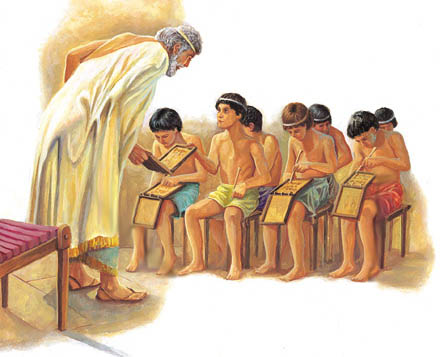
Perhaps if we weren't in such a hurry for our children to "grow up" or so busy comparing them to one stereotypical Athenian citizen, we'd actually make way for Rome's youngest citizens to grow.


In a world with real problems and true dangers, it's easy to hold onto fear and grab on tight to any lifeline, even if that lifeline is ruining your life and the life of your child.


This is not to say that learning isn't of value. However, let's not confuse learning with the memorization and regurgitation of outdated, canned knowledge.


Guided self-discovery along with emotional intelligence coaching and an opportunity to express oneself does wonders for the development of more advanced activities that arise when people feel enriched rather than suffocated.


I am an avid reader with a passion for learning, discovery, and adventure. Put me in a classroom and I look like this...


Not everybody feels the same way I did as a kid, some children actually excel in a closed-network environment - and that's fantastic.  

Still, I can't help but wonder if they're excelling just to make their parents and teachers happy. I guess the answer to that question can only be found out by asking a kid. 


Despite the differences we have in the world, we need to make a little more room for people to discover it on their own terms.